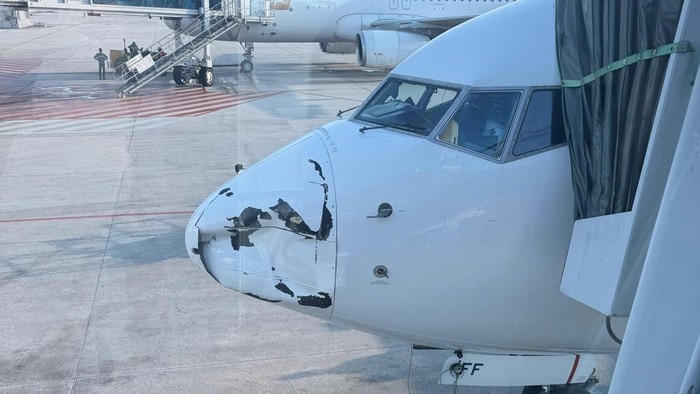

A Boeing 737-800 operated by Garuda Indonesia landed with significant damage to its nose cone, or radome, after a domestic flight from Jakarta to Pekanbaru on Saturday, March 7. Bizarrely, the severely damaged radome was only discovered after the aircraft had landed.
In a statement, Garuda Indonesia said:
“After landing, visual inspection by engineers and flight crew showed that the radome (nose of the aircraft) was severely damaged. Currently, it is still in the investigation process because the cause of the damage is not yet known.”
The damage was not detected during the flight and was only discovered after the aircraft had landed and routine post flight checks were conducted.
Understanding the aircraft radome
The radome is the protective nose cone located at the very front of an aircraft. Its name comes from a combination of the words radar and dome, as it houses the aircraft’s weather radar system. This radar allows pilots to detect storms, heavy rain, turbulence and other weather hazards ahead of the aircraft. Radomes are typically made from lightweight composite materials such as fibreglass, which are strong enough to protect the radar equipment while also allowing radar signals to pass through without interference. While damage to a radome does not usually affect the structural integrity of the aircraft, it can impact the performance of the weather radar, which is why aircraft are typically inspected and repaired before returning to service.
The aircraft involved, registration PK-GFF, is approximately 15.8 years old and has been grounded for inspection while engineers investigate the cause of the damage.
The radome is the protective nose cone at the front of the aircraft that houses the weather radar.
Due to the incident, the return flight from Pekanbaru to Soekarno Hatta International Airport was cancelled. Affected passengers were rebooked onto Citilink flight QG033 from Pekanbaru to Halim Perdanakusuma International Airport, which departed at 7:12 pm local time.
Authorities and airline engineers are continuing their investigation to determine what caused the damage to the aircraft’s radome.
Have questions or want to share your thoughts?