
Ethiopia has officially begun construction of Bishoftu International Airport, a $12.5 billion airport aimed to rival the Middle East’s connecting hubs. Expected to open in 2030, the new mega hub broke ground in January 2026 and is expected to handle 110 million passengers annually, making it one of the world’s busiest airports.
The mega-project is being built to ease severe congestion at Bole Addis Ababa International Airport, the hub for Africa’s largest airline, Ethiopian Airlines. Located 40km outside of the city, the new airport is set to firmly position Ethiopia and the wider region as a major global aviation gateway, aided by increased demand within the continent.
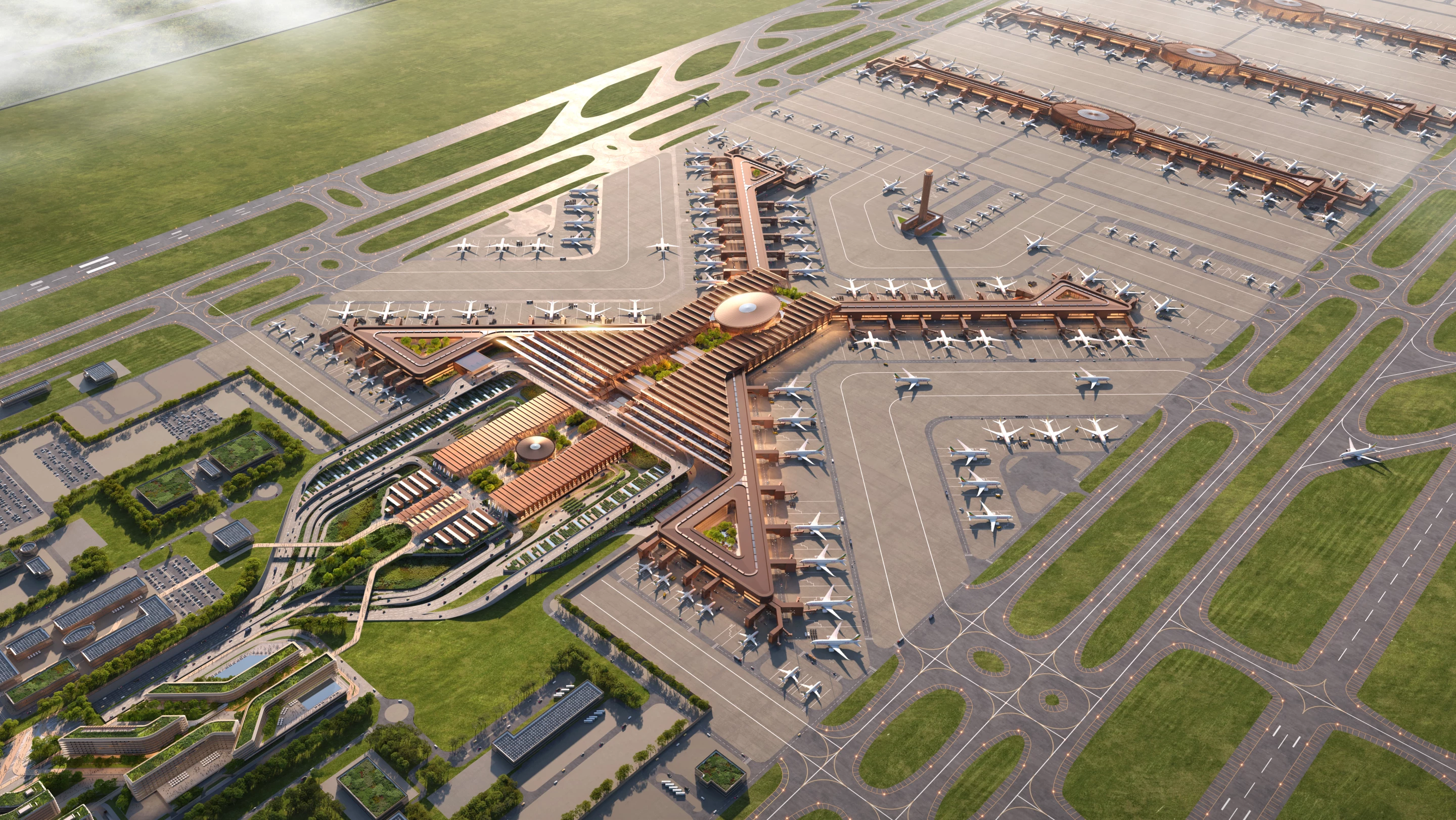
What Bishoftu International Airport will look like
Like many other major airport projects, the airport will be completed in phases, with phase one set to open in 2030. Initially, a new passenger terminal capable of handling 60 million passengers a year, two parallel runways, 180 aircraft parking stands, and approximately 660,000 square meters of passenger terminal facilities will open.
Phase two of Bishoftu International Airport will scale the airport to its designed capacity. While a timeline for the completion remains flexible, the plans are in line with Ethiopian Airlines’ Vision 2040 programme.
Once fully expanded, the airport will have four runways, an increased capacity of 110 million passengers a year, 270 aircraft parking stands, expanded cargo facilities, and a wider airport city development.

Ethiopian Airlines: the airline powering Africa’s aviation rise
At the centre of the project is Ethiopian Airlines, whose rapid expansion has been the main driver behind the need for a new airport hub in the region. Already Africa’s largest airline, the airline transported over 17 million passengers in 2023/2024, more than double from the previous year.
However, the airline’s ambitions extend far beyond the continent. Under its Vision 2040 strategy, Ethiopian Airlines has set its eyes on carrying 64 million passengers and operating an extensive fleet of over 300 aircraft. These plans will position the airline as a serious competitor to Gulf carriers such as Emirates and Qatar Airways.
Geographically, Addis Ababa is uniquely positioned between Europe, Asia, and Africa, enabling Ethiopian Airlines to tap into the connecting traffic market, which has been dominated by the Middle East for decades. The development of Bishoftu International Airport is not just about increasing capacity, but building a new global transit hub centred on Africa.
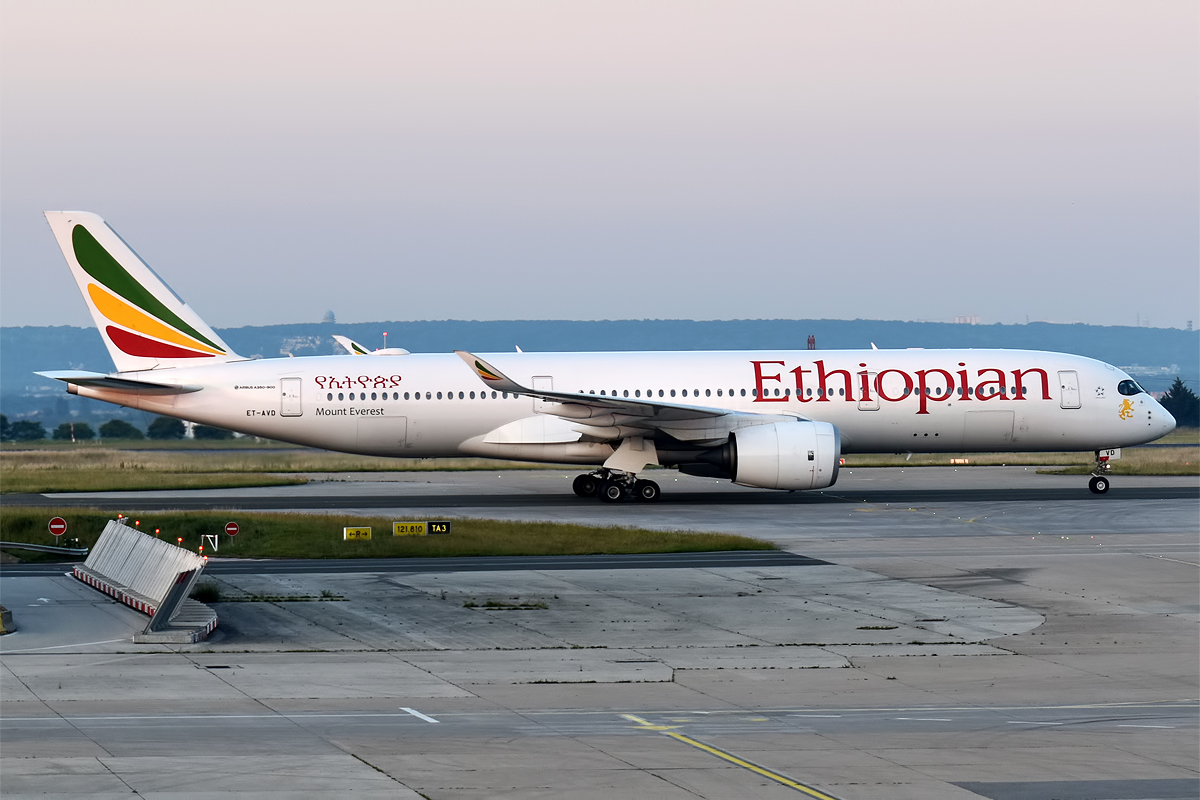
Crucially, Ethiopian Airlines is providing significant investment in the project by contributing 30% of the final cost. This underscores the airline’s long-term commitment to developing a world-class global hub.
Ethiopian Airlines Group CEO, Mesfin Tasew, said:
“This is truly a proud moment for Ethiopian Airlines and for all of Africa. Bishoftu International Airport is a major step towards addressing the infrastructural gap in Africa and a key player in implementing the African Continental Free Trade Area (AfCFTA), and at Ethiopian, we are committed to realise the completion of this project.”
Ethiopian Airlines’ fleet
According to Planespotters.net, Ethiopian Airlines operates a mixed fleet of 151 aircraft across Airbus, Boeing, and Bombardier types as of March 2026. With an average fleet age of just over nine years, the airline has one of the youngest fleets in Africa, compared to EgyptAir (11 years), Royal Air Maroc (12 years), and Kenya Airways (14 years).
Aircraft Type | Number in Fleet |
Airbus A350-900 | 22 |
Airbus A350-1000 | 4 |
Boeing 737-700 | 3 |
Boeing 737-800 | 13 |
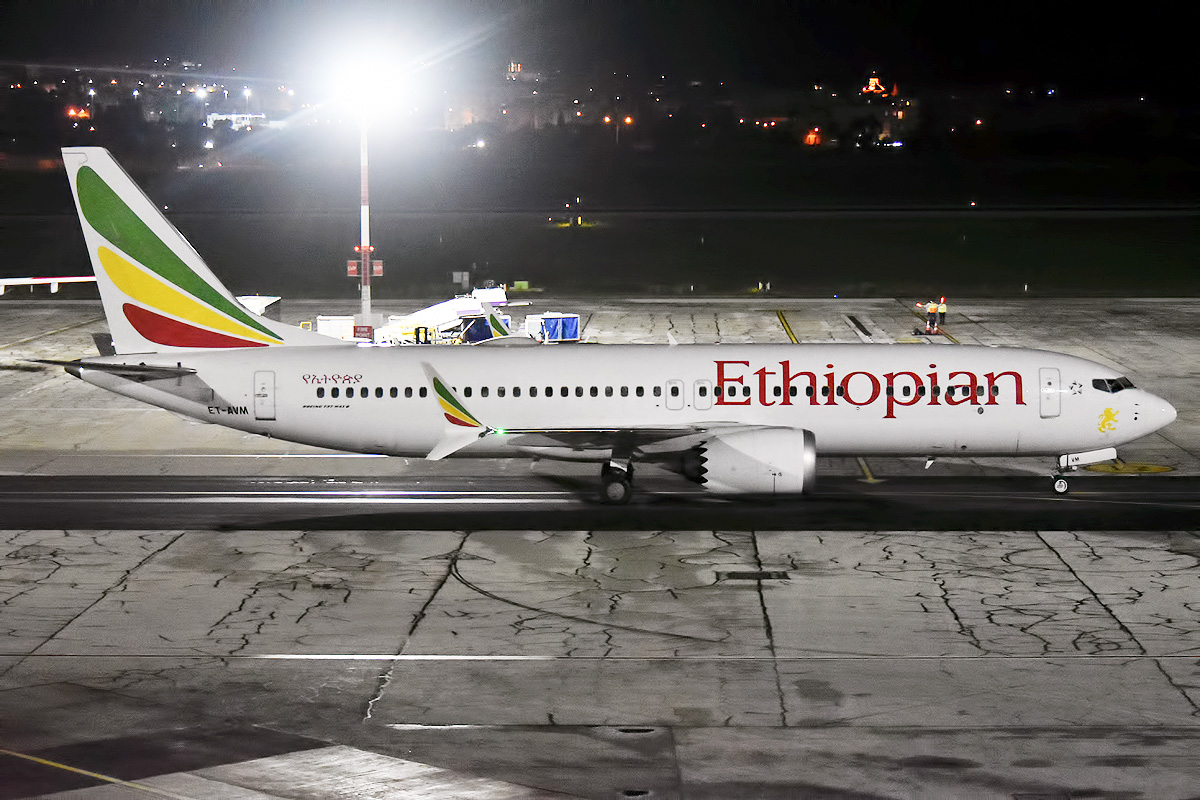
Boeing 737 MAX 8 | 23 |
Boeing 767-300 | 4 |
Boeing 777-200 | 6 |
Boeing 777-300ER | 5 |
Boeing 777F | 12 |
Boeing 787-8 Dreamliner | 20 |
Boeing 787-9 Dreamliner | 10 |
De Havilland Canada DHC-8-400 | 29 |
Ethiopian Airlines continues to order new aircraft to achieve its Vision 2040 strategy. In November 2025, the airline placed an order for a further six Airbus A350-900 aircraft and 11 Boeing 737 MAX 8 aircraft.
More recently, in January 2026, a further nine Boeing 787-9 Dreamliner aircraft were ordered, set to be delivered by 2033 to enhance the airline’s international connectivity.
In addition to its growing fleet, Ethiopian Airlines is set to become Africa’s launch customer of the Boeing 777X, with eight aircraft on order and options for a further 12.
AirlineRatings’ safety rating of Ethiopian Airlines
AirlineRatings.com rates Ethiopian Airlines as a Seven-Star rated airline for its continued commitment to operational safety. Under our methodology, we assess airlines’ safety based on numerous factors, including IOSA registration, fatal accidents, pilot-related incidents, operating safety standards, and EU flight bans.
Ethiopian Airlines meets the highest global safety benchmarks across these criteria, maintaining a strong track record. As Africa’s largest airline, its ability to scale operations while upholding consistent safety standards further highlights its position as the continent’s leading airline.
Find out how we determine safety ratings here.
If delivered as planned, Bishoftu International Airport has the potential to reshape how passengers connect between continents. With Ethiopian Airlines continuing its rapid expansion, backed by one of the youngest and most modern fleets in Africa, and demand for air travel across the continent rising, Addis Ababa is positioning itself as an alternative to the Middle Eastern mega hubs.
For decades, global transit traffic has largely bypassed Africa, favouring hubs in Europe and the Middle East. Backed by Ethiopian Airlines’ scale, network reach, and long-term ambition, this project signals a broader industry shift, one that could finally place Africa at the centre of international aviation.
For the first time in decades, the centre of global aviation connectivity may begin to shift south.
Have questions or want to share your thoughts?