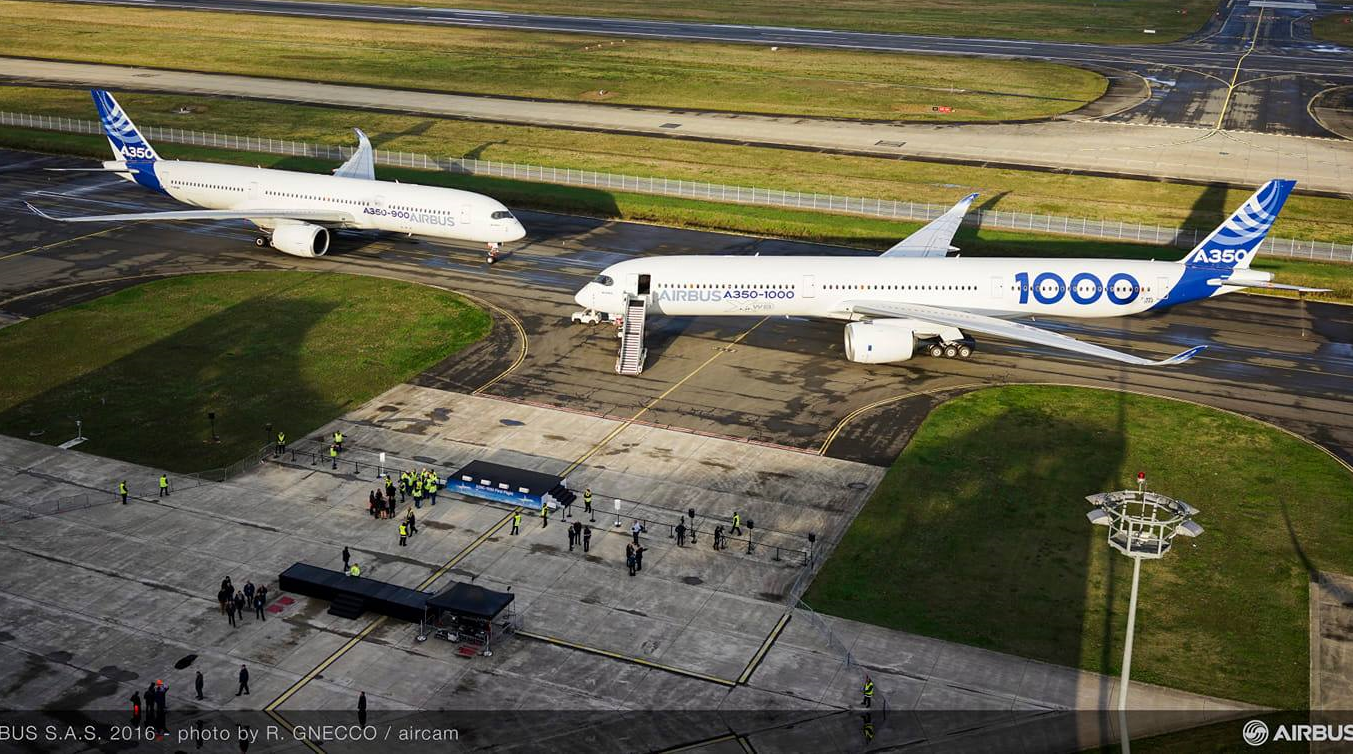

When Airbus launched the A350 XWB (Extra Wide Body) family, it aimed to redefine long-haul flying with a focus on efficiency, comfort, and cutting-edge technology. While the A350-900 was the first to take to the skies in 2014, it didn’t take long before its larger sibling, the A350-1000, followed in 2018—bringing with it notable differences that make each variant uniquely suited for different airline needs.
Size & Capacity: Stretching the Limits
At first glance, the A350-1000 simply looks like a stretched version of the -900—and that’s not far from the truth. The -1000 is 7 meters (23 feet) longer, allowing it to carry an average of 40 more passengers. While the A350-900 typically seats around 300 to 325 passengers, the A350-1000 can accommodate 350 to 410, depending on the airline’s cabin layout.
This extra capacity is especially attractive to carriers operating high-demand routes, where additional seats can significantly improve yield without increasing operating frequency.
Performance: Power and Range
Despite the added size and weight, the A350-1000 manages impressive performance thanks to Rolls-Royce Trent XWB-97 engines, more powerful than the XWB-84s found on the A350-900. These engines deliver about 97,000 pounds of thrust each—13,000 more than the -900 variant—enabling the larger aircraft to take off and climb efficiently even at heavier weights.
In terms of range, the A350-900 has a slight edge, capable of flying up to 8,100 nautical miles, whereas the A350-1000 maxes out around 7,970 nautical miles. This slight trade-off in range is a fair exchange for the increased passenger and cargo capacity.
Airline Use Cases: Different Needs, Different Jets
Airlines strategically choose between the two based on network demands. For instance:
Singapore Airlines uses the A350-900 in three different configurations, including Ultra Long Range (ULR) variants for non-stop flights to New York, and regional configurations for shorter routes in Asia-Pacific.
Qatar Airways flies both, with the A350-1000 exclusively featuring its famed Qsuite Business Class—ideal for premium-heavy, high-capacity routes.
British Airways and Cathay Pacific also deploy the -1000 variant on trunk routes such as London–New York and Hong Kong–Los Angeles, where demand justifies the added capacity.
Meanwhile, airlines like Finnair or Vietnam Airlines stick to the -900, benefiting from its slightly longer range and better efficiency on thinner, long-haul routes.
READ: Asia’s largest operators of the A350 Aircraft
Cabin Comfort: Equally Modern
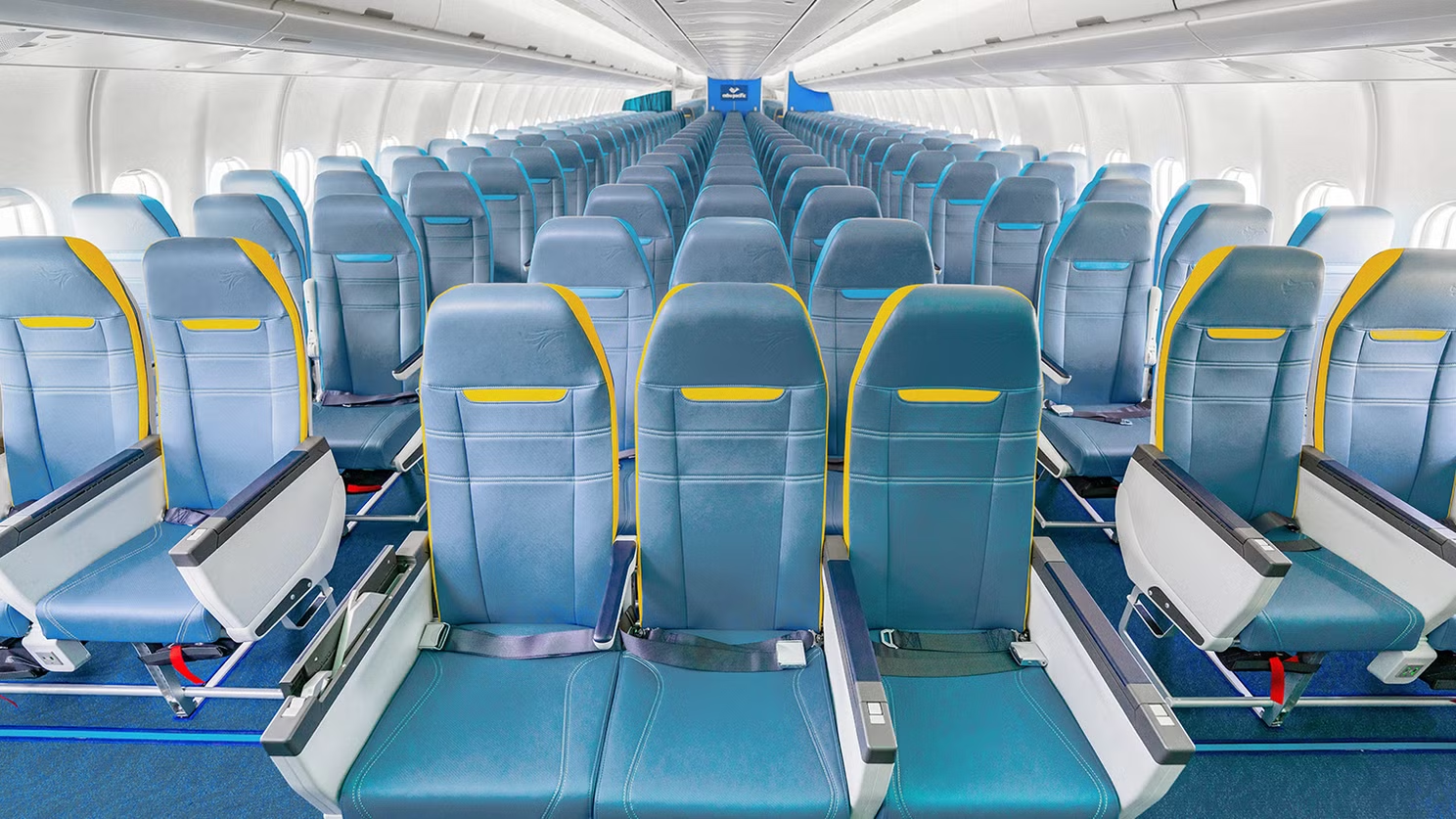
Both the A350-900 and -1000 offer Airbus’ signature cabin features: a 5.96-meter-wide fuselage, higher ceilings, lower cabin altitude, and improved humidity, making long-haul travel more bearable for passengers. Whether flying on the -900 or -1000, passengers enjoy the same noise-reducing technology and next-generation inflight entertainment systems.
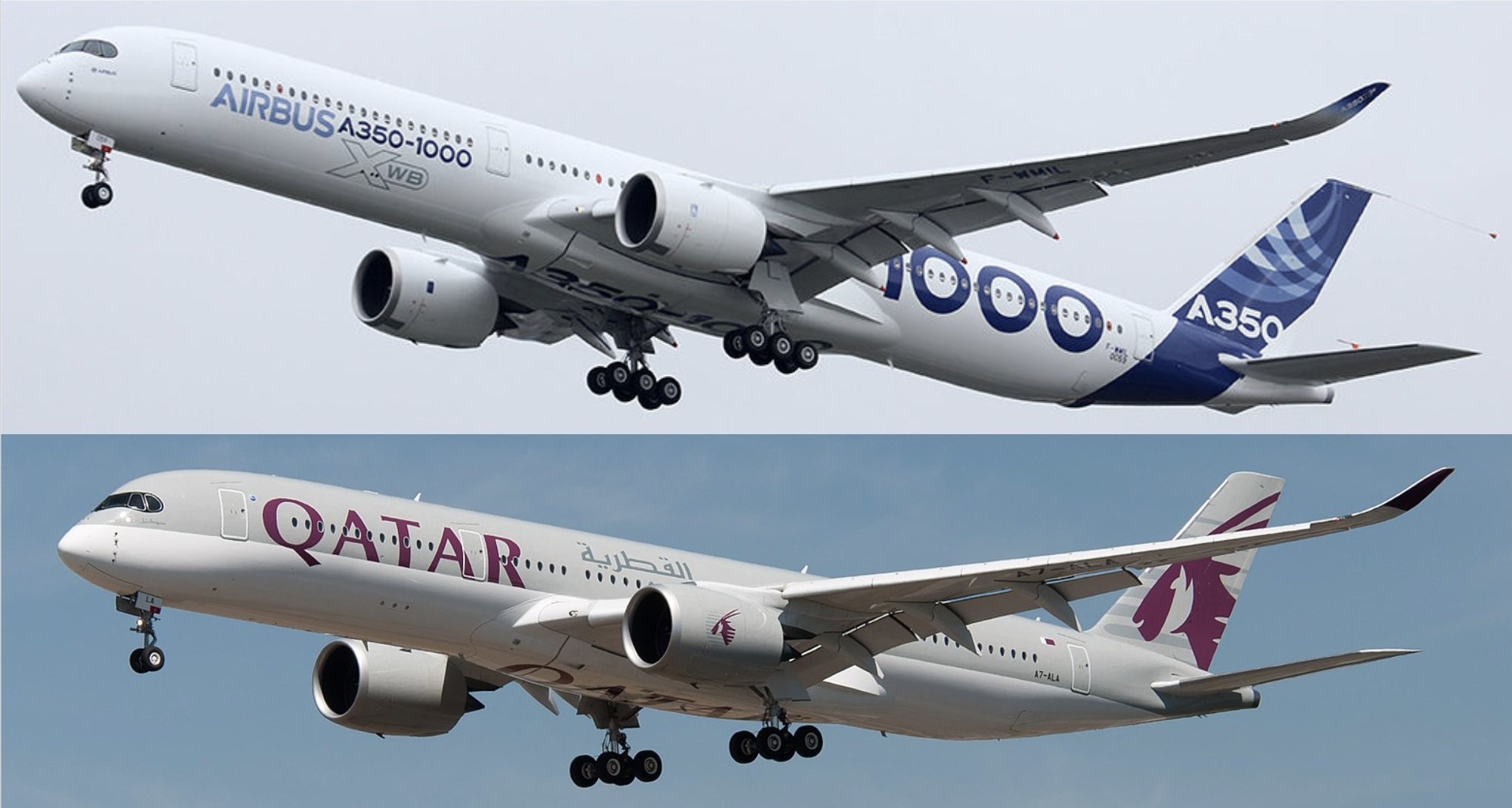
The Easiest Way to Tell the Difference Between the A350-900 and A350-1000
As you can see in the image below, the A350-1000 differs from its smaller A350-900 counterpart in terms of its landing gear, with six-wheel bogies making up the main gear compared to the more conventional four-wheel design found on the A350-900.
Summary: Two Sides of the Same Coin
While both aircraft share the same DNA, the A350-900 and A350-1000 serve different missions. The -900 is a long-range workhorse ideal for thinner or ultra-long-haul routes, while the -1000 is a high-capacity variant that excels on busy, premium-heavy trunk routes. Airlines value the flexibility of operating both under the same pilot type rating and maintenance program—another win for Airbus.
So next time you're booking a long-haul flight on an A350, take a moment to check whether it's a -900 or a -1000. The difference may be subtle from the cabin, but the story behind each aircraft’s design speaks volumes about the future of global air travel.
Have questions or want to share your thoughts?